
News & Events
She Thought She Had Months to Live After a Myeloma Diagnosis. Instead, Research Has Given Her 17 Years.
Judith Harding’s myeloma journey shows what decades of research progress means for patients today.
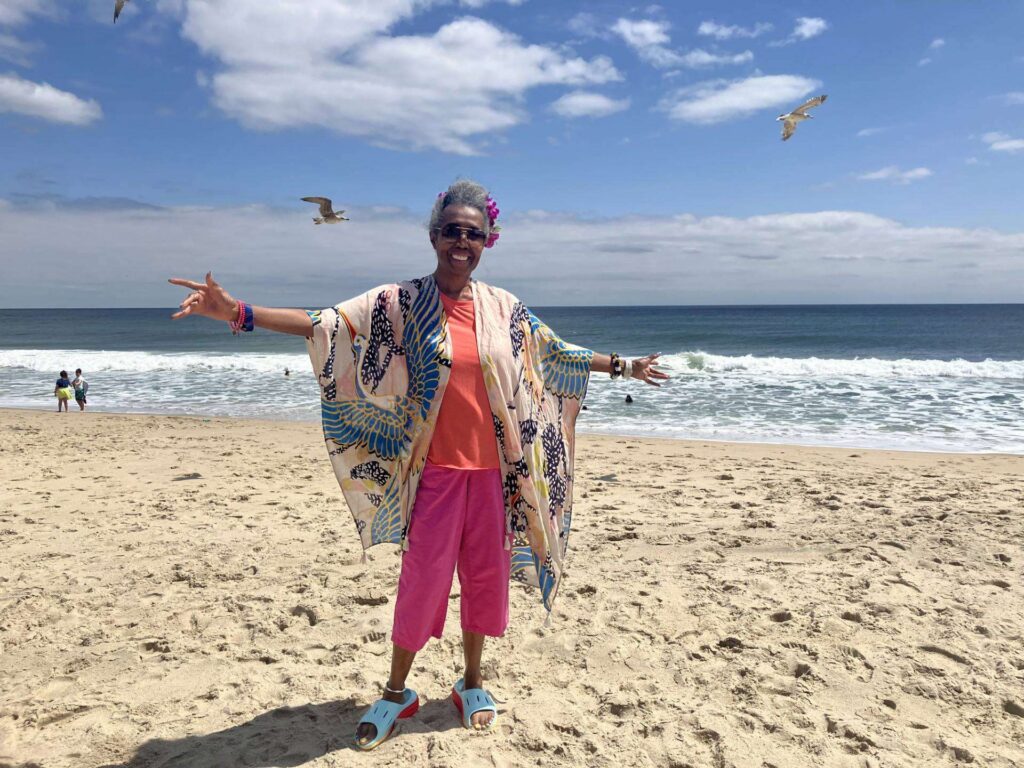
Judith Harding was at the top of her game personally and professionally: pursuing her fourth degree—a doctorate in education—and spending her free time traveling and living her dream life in New York City.
So, when she developed pain behind her ribcage in late 2008, she assumed she was just fatigued. Two doctors initially suggested she had arthritis, but she pushed for additional testing. After an initial round of blood work, her doctor referred her to a hematologist-oncologist for a battery of additional tests, including a bone marrow biopsy and head-to-toe scan. A month later, in January 2009, she was diagnosed with myeloma—a disease she had never heard of and one that she was told was terminal and incurable. She assumed she had, at most, a year to live.
“I thought my life was coming to an end,” she remembered. “Within two weeks, I put my condo on the market. I called the cemetery where my parents had their mausoleum. I dropped out of my doctoral program. I planned to move in with my sister and her family to wait out my last days.”
Shortly after moving in with her sister, Judith began treatment, starting with triplet therapy followed by a stem cell transplant. While Judith initially responded well to the stem cell transplant, her reprieve didn’t last long. Nine months later, her light-chain numbers rose, and she was onto the next line and the next and the next. Over the years, Judith has had so many treatments that she can’t remember them all. In 2023, she underwent CAR T-cell therapy, which bought her about a year and a half in remission.
“I’m not one of those people who has long remissions and is on drugs for years,” she said. “It’s only a matter of weeks or months for me and then we’re onto something else.”
Still, despite a disease that has demanded more from her than most people can imagine, Judith is still here nearly two decades after the shock of her initial diagnosis. What’s more: Judith ended up completing her doctorate degree after all, sometimes bringing her laptop and books with her to appointments. She has been fortunate to travel over the years and remains an active member of her church.
Earlier this year, Judith enrolled in a clinical trial for a next-generation CAR T-cell therapy directed a GPRC5D, a promising target whose potential was confirmed using data from the Multiple Myeloma Research Foundation® (MMRF®).
“My most recent bone marrow biopsy came back MRD-negative,” she said. “In my entire 17-year journey with myeloma, I’ve never heard that before now. I’m praying that I have a sustained response to this treatment. But although they have the myeloma under control, I’m feeling the effects of years of heavy treatment.”
When she reflects on her journey with myeloma, Judith is quick to give credit to research. She knows that every new treatment she has tried is the result of years of studies and clinical trials—and that she has been fortunate to live long enough to benefit from advances that didn’t exist when she was first diagnosed.
“I feel that I’m alive today because of all the research that has been ongoing, and the MMRF is so prominent in that research,” she said. “As a patient, the MMRF is my ultimate lifeline and source of hope. By raising more than $600 million for research, they have directly fueled the approval of 15-plus FDA-approved therapies, giving me and countless others more time to pursue our dreams.”
For Judith, the MMRF has been more than a research organization. As someone who navigates myeloma alone, she has also found the MMRF’s Patient Navigation Center to be an invaluable resource.
“My patient navigator, Grace, has been truly supportive, empathetic, and knowledgeable about every aspect of the disease,” she said. “It means a great deal when you are dealing with this to talk to somebody who has experience.”
Looking forward, Judith prays that she has a sustained response to her last treatment, and she hopes that by giving to the MMRF, she will be able to help the myeloma patients that come after her.
“When I was first diagnosed, I was told myeloma was terminal,” she said. “Now we’re starting to use the word cure. I feel it’s my legacy to help this community by being part of a clinical trial and supporting the MMRF, so maybe someone is who is diagnosed today can be cured.”