News & Events
Hearn Jay Cho, MD, PhD on the Evolution and Future of Myeloma Care
The MMRF’s chief medical officer discusses the scientific advances, collaborative spirit, and patient stories that drive his work.
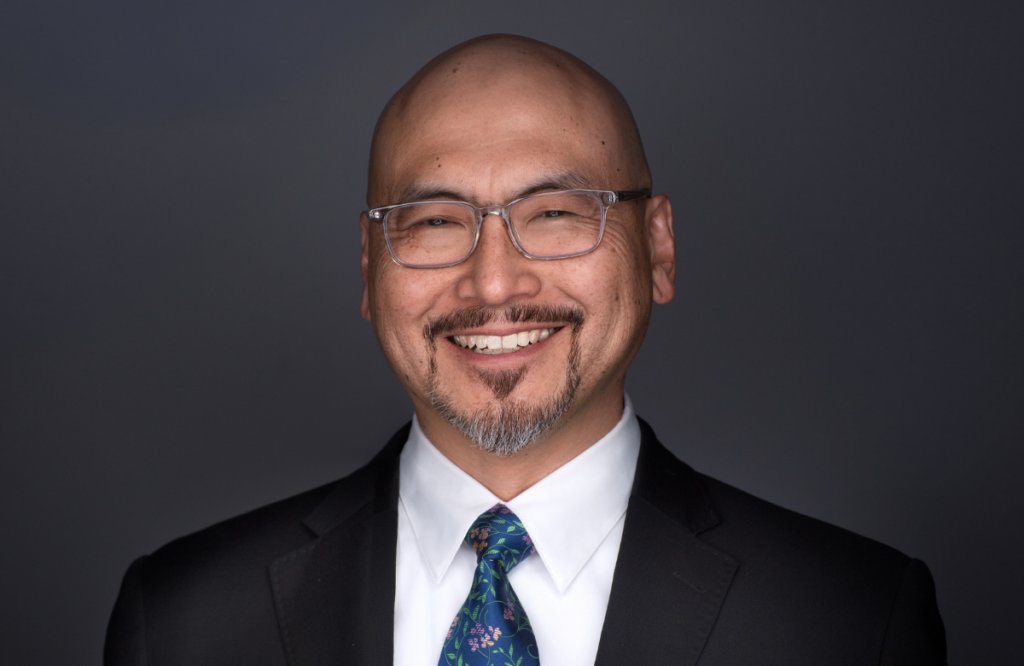
Hearn Jay Cho, MD, PhD has spent more than two decades advancing myeloma science and care. As the chief medical officer of the MMRF, Dr. Cho develops the MMRF’s clinical research strategy and leads the Multiple Myeloma Research Consortium, a network of leading cancer centers.
Dr. Cho is a clinical professor of medicine at the Icahn School of Medicine at Mount Sinai and an attending physician at Mount Sinai’s Tisch Cancer Center. His laboratory is investigating novel therapies for myeloma.
Here, Dr. Cho shares what drew him to work on behalf of myeloma patients and why he’s optimistic about the future.
What drew you to oncology and myeloma as a specialty?
I planned to go to medical school and become a surgeon, but that changed pretty quickly. I took an immunology course that included lectures on how the immune system interacts with cancer. This was the mid-1980s—the very beginning of modern cancer immunotherapy—and the idea that you could harness the immune system to treat disease really captured my attention. I got involved in cancer immunology research as an undergraduate, and from there, I decided to pursue my medical degree and a doctorate with a focus on immunology. Today, I’m essentially doing what I set out to do at 20. Myeloma came into the picture during my fellowship. It stood out because it’s a disease of the immune system, which aligned with my scientific interests. Being there at the start of the modern treatment era—from early thalidomide trials through to today’s immunotherapies—made it both compelling and rewarding.
I happened to enter the field at a moment when myeloma research was beginning to accelerate. Looking back, my career has really paralleled the modern era of myeloma therapy, from the first novel agents to today’s cellular therapies. It has been remarkable to watch those advances unfold and, more importantly, to see what they have meant for patients.
What motivated you to come to the MMRF, and what do you find most fulfilling about your role?
I worked with the MMRF as an investigator from the earliest part of my career. The MMRF was one of the main drivers of innovative research that resulted in new myeloma therapies. We continue that mission today through collaboration. The field today is heavily driven by pharmaceutical innovation, which has led to tremendous progress—but no single company has all the answers. To really move the field forward, you need a way to bring different agents, ideas, and datasets together, and that requires a trusted third party. The MMRF is uniquely positioned to play that role.
What appealed to me most was the mission. At the MMRF, everyone is working toward the same goal: developing better treatments and, ultimately, cures for patients. That clarity of purpose makes it easier to do ambitious work across institutions and sectors.
I’ve found it incredibly fulfilling to work alongside a team that is deeply committed and highly collaborative, and to contribute in a way that helps shape not just individual studies, but the direction of the field. Everyone across the organization is aligned on the same mission. Whether you work in research, clinical operations, fundraising, communications, or another function, the focus is always on advancing the best programs for patients. That shared sense of purpose is incredibly motivating.
What makes you most hopeful about where myeloma research and care are headed?
When I started in myeloma around 2000, patients were still being told that survival was two to three years. We had older chemotherapies that didn’t work well, and patients inevitably relapsed. What’s remarkable is that I’ve now followed some of the same patients for more than 20 years. These patients are living proof of the field’s progress. However, the job is not finished.
There have been three major revolutions in myeloma. The first was the introduction of targeted agents like Velcade® and Revlimid®. The second was the arrival of immunotherapies, particularly monoclonal antibodies like Darzalex® and Sarclisa®. And the third has been T-cell–redirecting therapies, including CAR T and bispecific antibodies.
What gives me the most hope now is that we’re entering a phase where curative therapy is not just theoretical, it’s feasible. We are also getting closer to understanding which patients are most likely to benefit from specific treatment approaches. We have a powerful set of tools. The challenge and opportunity are figuring out how to use them— guided by data and science—to deliver the best possible outcomes for patients. You need science, data, and a platform to test hypotheses, and we have all of those things moving forward today.