
The new platform builds on the Multiple Myeloma Research Foundation’s long track record as the field’s leader in data sharing.
Data will drive the next breakthroughs—and cures—in multiple myeloma. But we have a data siloing problem in multiple myeloma. The Multiple Myeloma Research Foundation’s next innovation in data sharing, MMRF Virtual Lab®, is designed to tackle this challenge and, ultimately, accelerate cures.
Cancer research efforts are often independent and disconnected. Biopharma companies hesitate to share data that might help competitors gain an edge, while academic researchers keep data at their institutions to protect their plans to publish. The result: a lack of easily accessible, high-quality data to help researchers analyze findings, ask new questions, and design better studies that move the field forward.
“Multiple myeloma is an extremely complex disease with many subtypes, and data are really the key to unlocking that complexity and making further clinical progress,” says MMRF Chief Scientific Officer George Mulligan, PhD. “But data tend to be very spread out or limited. Broad data access, for all researchers and for testing of new tools like artificial intelligence, opens possibilities for new and faster discoveries—but not if data are restricted or behind closed doors.”
With the MMRF Virtual Lab, the Foundation is launching multiple myeloma’s largest, most-comprehensive data-sharing platform—and making its unparalleled data available to researchers all over the world. All the data the MMRF has generated through its landmark research projects past and present will be stored in this platform. Researchers will be able to harness new Immune Atlas datasets, along with the final update of the genomic and clinical data from the MMRF’s seminal CoMMpass study.
“The MMRF has a long history of sharing data. Driven by our mission to accelerate a cure for each and every multiple myeloma patient, the Foundation has always held that collaboration drives discovery,” says the MMRF’s President and CEO Michael Andreini.
The MMRF built the first multicenter tissue bank for the disease and, a few years later, led the charge to sequence multiple myeloma’s genome, sharing that data with the field. Recognizing the urgent need for new breakthroughs, the MMRF launched the CoMMpass study to link genomic data from over 1,100 patients with their clinical results after treatment. The MMRF began sharing the results with the research community in real time—not years down the road when the data was “complete.” To date, more than 3,000 researchers have tapped into our data, which has led to more than 250 discoveries.
“By crossing boundaries to generate and disseminate data, we’ve improved care and helped drug development,” Andreini says. “With the MMRF Virtual Lab, we’ll build on our incredible progress and get even closer to cures.”
The MMRF’s History of Generating and Sharing Data
2004
Built the first multicenter tissue bank to enable large-scale research efforts.
Created the first clinical consortium to advance innovative treatment approaches in the highest areas of unmet need for patients.
2008
Sequenced the myeloma genome to find new targets and biomarkers.
2009
Started sharing the first myeloma genome sequencing results with the field.
2011
Launched CoMMpass to understand how genomics influence prognosis and treatment outcomes and promoted collaboration by making data publicly available.
2018
Launched the first platform drug trial in myeloma through MyDRUG™ to test the impact of several different drugs on different genetic mutations.
2019
Expanded on CoMMpass’ success and launched the Immune Atlas program to better understand how a myeloma patient’s immune system might change during disease progression and therapy.
2024
Introduced the Horizon Clinical Trials Program to test multiple novel therapy combinations to improve outcomes for myeloma patients.
2025
Now with the Launch of Virtual Lab, the MMRF is building on our years of leadership by providing the research field with multiple myeloma’s largest, most-comprehensive data-sharing platform.
Horizon Two extends innovative clinical trial program to patients with some of greatest unmet need in myeloma.
Today, the Multiple Myeloma Research Foundation® (MMRF®) announced that the first patient has been enrolled in the groundbreaking Horizon Two clinical trial that aims to identify the best treatments and treatment combinations for patients with high-risk, newly diagnosed multiple myeloma. This is the only multicenter clinical trial for high-risk newly diagnosed myeloma in the U.S.
Over the last 25 years, we’ve made incredible progress treating standard-risk multiple myeloma—to the point that a very small number of patients are now considered cured. But the estimated 20 percent of patients who have high-risk disease haven’t seen the same benefits. They relapse quickly and cycle through standard therapies faster.
“Horizon Two represents the next leap forward in the Horizon Clinical Trials Program—bringing the same innovative platform design to a population that urgently needs better options,” said the MMRF’s President and CEO Michael Andreini. “Progress for high-risk patients has been too slow and the options too few. This trial is built to change that by rigorously testing the combinations and strategies that are most likely to change their outcomes.”
Horizon Two is designed to answer questions that matter most to high-risk patients—and that no one else is pursuing. Investigators will study what therapies and combinations have the maximum benefit and whether patients can safely stop treatment altogether after a sustained period of negative minimal residual disease (MRD).
The trial is conducted by the MMRF’s clinical research subsidiary: the Multiple Myeloma Research Consortium® (MMRC®), a collaborative network of leading academic medical centers and community-based clinics across the U.S.
Unlike traditional clinical trials that test one treatment at a time, the MMRC Horizon Clinical Trials program uses an innovative adaptive platform that’s built for speed. Its design allows investigators to test multiple treatments (also called “arms”) at the same time and to open arms more quickly than other trials can. The result: New insights and data about the most effective therapies and combinations on a faster timeline.
“High-risk myeloma is a small enough population that no single site could run this trial alone. It requires a large, coordinated network and a leader willing to prioritize patient need. The MMRF is that leader,” said Horizon investigator Dr. Sham Mailankody of Memorial Sloan Kettering (MSK) Cancer Center. “By uniting sites across the country under one innovative platform, we can finally pursue the questions that matter most to these patients.”
Horizon Two is currently enrolling an experimental arm and a control arm, comparing a novel drug combination with a BCMA-directed bispecific antibody as a first-line treatment against a standard regimen. Patients in each of these arms who achieve MRD-negativity will be allowed to discontinue treatment after three years of maintenance therapy.
The novel combination includes Lynozyfic® (linvoseltamab-gcpt, manufactured by Regeneron), Kyprolis® (carfilzomib, manufactured by Amgen), Revlimid® (lenalidomide, manufactured by Celgene Corporation), and dexamethasone, followed by high-dose therapy (HDT) with autologous stem cell transplant (ASCT). Patients will then receive Lynozyfic-based consolidation and maintenance treatment.
The standard drug regimen involves Sarclisa® (isatuximab-irfc, manufactured by Sanofi), Kyprolis® (carfilzomib), Revlimid® (lenalidomide), and dexamethasone, HDT-ASCT, consolidation, and maintenance.
Additional investigational arms are planned.
“We don’t yet have consensus on the best way to treat high-risk, newly diagnosed patients—making this one of the most challenging areas in myeloma. But Horizon Two is designed to change that,” said MMRF Chief Medical Officer Hearn Jay Cho, MD, PhD. “This BCMA-directed bispecific antibody has already proven very effective in relapsed/refractory patients. By investigating it as a first-line treatment for high-risk myeloma, we’ll generate critical evidence that physicians and patients need to make informed decisions.”
The MMRC’s broad, diverse, and collaborative network ensures that Horizon investigators can enroll more patients and that the trial’s population is far more representative of the disease. In fact, the Horizon One clinical trial focused on optimizing treatment for relapsed/refractory myeloma has so far enrolled more Black patients and patients over the age of 71 than other myeloma trials—two groups that have been historically underrepresented in research.
As with other landmark MMRC-led studies, Horizon investigators will collect blood and bone marrow samples to gather vast amounts of clinical and laboratory data. This will deliver new insights on how and why patients respond to therapies, thereby laying a foundation for more personalized care for this patient population with high unmet need.
“Patients with high-risk myeloma can’t afford to wait years for the field to catch up,” Andreini said. “That urgency drives everything we do at the MMRF. Horizon Two is our commitment to these patients made concrete: the best science, the broadest possible patient population, and a platform designed to get answers faster than anyone thought possible.”
For more information on Horizon Two, visit our website or clinicaltrials.gov.
A team led by Jonathan Keats, Ph.D. at The Translational Genomics Research Institute (TGen), part of City of Hope, has just launched JAYseqTM, a new whole genome sequencing test for multiple myeloma. By delivering a detailed picture of a patient’s disease at the molecular level, the test can give doctors more information to help guide treatment decisions. TGen’s collaborations with the MMRF over the past 15 years on the MMRF’s Multiple Myeloma Research Consortium Genomics Initiative and CoMMpass Study established the value of whole genome sequencing in multiple myeloma and the importance of making personalized treatment a reality for patients.

The MMRF’s Chief Scientific Officer George Mulligan, PhD, said that this test represents the Foundation’s longtime commitment to research that informs how patients are treated to improve outcomes.
“This test allows doctors to measure large and small genomic abnormalities in myeloma cells—information we expect clinicians will use more frequently to help guide treatment decisions,” Mulligan said. “This is a promising step toward more optimized patient care and another example of how the MMRF is helping deliver progress for patients.”
Note: JAYseq is not yet reimbursable by insurance, and the TGen Clinical Laboratory (a subsidiary of TGen) cannot accept samples collected in New York State. Clinicians can find more information about JAYseq here.
Whole genome sequencing can be used in multiple ways. The most recent definition of high-risk and low-risk myeloma (a predictor of how aggressive the disease will be), for example, relies on sequencing tumor genes. Because genome sequencing is much more sensitive than tests like FISH, it can paint a far more complete picture of a tumor and better inform this risk assignment. Sequencing can also reveal tumor abnormalities that help doctors decide on a patient’s next treatment, such as the status of genes that are essential for BCMA-targeting therapies like CAR T-cell therapy and bispecific antibodies.
While there is one other whole genome sequencing test for myeloma on the market today, results can take several weeks. JAYseq takes just 72 hours.
“For the first time, JAYseq allows us to view the full genomic blueprint of each multiple myeloma tumor. This enables us to identify not only why a specific therapy might succeed, but also which mutations could cause it to fail,” said Keats, who serves as associate professor in TGen’s Integrated Cancer Genomics Division and scientific director of the Judy and Bernard Briskin Center for Multiple Myeloma Research at City of Hope. “This level of detail is essential for truly individualizing cancer care.”
JAYseq is named in honor of the late myeloma patient Jay Hollingsworth, whose sister, Susan Nason, helped support the development of the test in his honor. Hollingsworth’s myeloma journey showed why this test’s speed is so important, especially for patients with aggressive disease who relapse quickly.
Hollingsworth’s doctor at City of Hope Los Angeles recommended that he undergo CAR T-cell therapy after exhausting other treatment options. While his CAR T cells were being manufactured, Keats and his team sequenced Hollingsworth’s tumor.
The results were devastating: In a short amount of time, his tumor had lost the gene that would have made CAR T-cell therapy successful, but it had three copies of another gene that suggested a different treatment. Hollingsworth’s doctor switched treatments, sparing him from an intense, expensive CAR T-cell therapy that wouldn’t have worked.
Early on, Keats and his team at TGen knew they needed diverse tumor samples for the validation of JAYseq. They found the ideal set in the MMRF’s 1,100-patient CoMMpass Study, which is the largest myeloma dataset in the public domain.
CoMMpass is a central part of the MMRF’s efforts to define the complexity of myeloma and optimize patient care. For more than 15 years, the MMRF collaborated with the team at TGen first on the Multiple Myeloma Research Consortium Genomics Initiative and then to build the CoMMpass dataset and analyze its results. Both helped demonstrate the value of whole genome sequencing in myeloma.
Importantly, over the course of those 15 years, the team not only published key findings in scientific journals, but it also shared preliminary data with the global cancer research community every six months to spark the kind of large-scale collaboration that would yield impactful results for patients. To date, more than 700 published studies and counting have used data from CoMMpass patients, and CoMMpass is widely viewed as myeloma’s most valuable dataset.
In 2024, the MMRF and TGen teams extended their collaboration so TGen could use stored CoMMpass samples for the final stages of JAYseq’s assay validation.
“CoMMpass gave us something invaluable: a large, deeply characterized dataset that let us rigorously validate what whole genome sequencing can detect in myeloma and why it matters clinically,” Keats said. “But beyond the data, the MMRF brought the infrastructure and commitment to rapidly sharing findings with the global research community that accelerated everything we were able to learn. The MMRF has encouraged a culture of collaboration through 15 years of research and inspired scientists to pursue a new test that can actually reach patients.”
JAYseq not only represents the cutting-edge research and cross-institutional collaboration that the MMRF is known to foster but also the organization’s keen foresight. Since the MMRF was founded more than 25 years ago, the organization has helped usher numerous treatments from early clinical trials to real-world care, spent years building what are now today’s most valuable myeloma datasets, and pursued some of the most innovative research initiatives in cancer.
“JAYseq, like all tangible progress for myeloma patients, requires years of persistence, expertise, and vision that are the hallmarks of the MMRF’s approach,” said Chief Mission Officer Anne Quinn Young, MPH. “We’re proud of the fact that our studies and collaborations continue to drive new tests, treatments, and breakthroughs for patients everywhere.”
The Multiple Myeloma Research Foundation® (MMRF®) continues to drive the most innovative, patient-centered research in multiple myeloma—all thanks to the MMRF community’s extraordinary generosity.
In 2025, our supporters enabled us to invest $27.1 million in critical research and patient education programs that are making a meaningful impact and accelerating cures.
The MMRF is proud to share its 2025 Donor Impact Report.
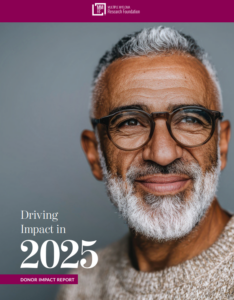
Here’s a preview of what our supporters made possible last year:
- Through the Myeloma Investment Fund®, we made strategic investments in two companies pursuing in vivo CAR T-cell therapy platforms, which promise to make this therapy more accessible and affordable.
- The Horizon Clinical Trials program—run by the Multiple Myeloma Research Consortium® (MMRC®), a subsidiary of the MMRF—moved full speed ahead and surpassed many of its goals.
- MMRF data powered several of the field’s major developments, and we launched our next innovation in data-sharing: the MMRF Virtual LabTM.
- Our trusted patient education and support programs reached more than 17,000 patients and caregivers.
- …and so much more.
“Myeloma’s biggest breakthroughs—and cures—are within reach, but the road ahead demands our greatest effort yet,” said the MMRF’s President and CEO Michael Andreini. “With the MMRF’s supporters by our side, we’re ready to meet any challenge.”
Read the full 2025 Donor Impact Report here.
 Earlier this year, the Myeloma Investment Fund® (MIF), a wholly owned subsidiary of the Multiple Myeloma Research Foundation® (MMRF), made a new investment in Coding Bio, an Oxford, U.K.–based biotechnology company.
Coding Bio’s platform could accelerate the development of best-in-class immunotherapies for multiple myeloma and other cancers. By combining machine learning with advanced cellular screening technology, Coding Bio can rapidly test millions of protein candidates to pinpoint the designs that are most capable of triggering powerful immune responses against cancer. The company’s modular approach allows multiple cancer targets to be addressed by a single therapy, potentially overcoming one of the most persistent challenges in myeloma treatment: drug resistance.
“Coding Bio’s work exemplifies the kind of bold, rigorous science that we believe will move the needle for myeloma patients and reflects the MIF and MMRF’s commitment to fostering bold innovation,” said Managing Director Stephanie Oestreich, PhD, MPA.
We spoke with Coding Bio’s CEO Simon Bornschein about the promise of the company’s platform and how it could speed up the drug development process, why the MIF’s funding and support is so crucial, and more.
Tell us about Coding Bio and how the company got started.
I have a PhD in cancer immunology and have spent much of my career working on immunotherapies. One thing I noticed over the years was that the field has traditionally focused on generating high-affinity antibodies—essentially measuring how strongly a therapy binds to cancer cells. But what really matters is how well the immune system becomes activated and mounts a response against those cells. That insight became the foundation for what we built at Coding Bio.
When my co-founder, Yulia Lampi, and I started the company four years ago, we built a platform that can test millions of potential therapeutics and measure what candidates actually trigger the most powerful immune response against cancer directly in immune cells. We can now test more than 70 million different therapeutics and use that dataset to train machine learning models that simulate immune response. That lets us generate and refine new immunotherapy candidates far more efficiently than traditional methods.
How is machine learning central to what Coding Bio does?
Three years ago, we made the decision to build machine learning models around our growing dataset. The idea is that once you’ve measured the immune response for tens of millions of therapeutics, you can train a model to simulate that response—and then use the model to design better candidates without having to run every experiment from scratch. The advances that have driven large language models like Claude and ChatGPT are the same advances we’re tapping into for drug discovery. Instead of predicting the next word in a sentence, we’re predicting the next amino acid in a protein sequence.
Why is a modular approach to immunotherapy so innovative, especially for myeloma?
One of the big limitations with immunotherapies today is that they tend to target only a single antigen on cancer cells. In myeloma, most available therapies go after the same targets, which means when patients develop resistance—as often happens—there aren’t many options left to try.
Our approach is different. Our lead program, CB101, targets two different antigens on myeloma cells simultaneously. The therapy can kill cancer cells if target A is present, or if target B is present, or both. If the cancer loses one of those targets, the other can still do the job. We’re essentially trying to preemptively outsmart resistance.
And that modularity is designed to scale. The next iteration could go after three targets, or it could target the tumor microenvironment. Our platform lets us quickly swap new binding domains [the parts of the therapy that physically latch onto a target] as we discover them, which means we can build increasingly sophisticated therapies without starting from zero each time.
What problem is Coding Bio ultimately trying to solve for patients?
We’re trying to develop a therapy that can match the remarkable efficacy of CAR T-cell therapy but be available off the shelf for any patient who needs it. CAR T requires manufacturing individualized cells from each patient’s own blood, which is time-intensive and expensive. Few myeloma patients receive CAR T simply because they don’t live near a major academic medical center that can administer it.
With an antibody-based therapy like CB101, we can produce hundreds of thousands of liters of it to freeze, and have it ready to inject when a patient needs it. The goal is that the next generation of therapies, like ours, can approach the same effectiveness as CAR T but be accessible to far more patients.
How does Coding Bio’s platform speed up drug development?
Drug development is inherently slow, especially when it comes to clinical development. But we can make a real difference in the discovery and early development phase. Once we identified a target for CB101, it took us six months to go from that insight to having a candidate ready to test in animals. With traditional approaches, that process can take two to five years. We’re hoping to move into a phase 1 clinical trial in early 2027, less than a year and a half after identifying the target. That’s the kind of acceleration that this technology can enable.
How will early funding from the MIF advance Coding Bio’s work?
This funding is critical for getting us through the most capital-intensive phase of development: manufacturing the molecule at a scale suitable for clinical use and for pushing it toward a first-in-human trial. You can build a lot of promising molecules in the lab, but at some point, you have to start manufacturing. That costs money. The MIF’s investment is what’s getting us across that threshold. In addition, MIF has a vast investor network and pharma contacts for business development discussions.
Beyond capital, what makes the MIF’s investment different from traditional venture capital funding?
The validation alone is significant. Having one of the world’s largest nonprofit focused solely on myeloma research back your myeloma program is a powerful signal to external investors, to the scientific community, to everyone watching the space. It says the people who know this disease best believe this therapy could make a difference for patients.
But beyond that, the MMRF brings something venture capital can’t: deep, direct connections to the clinical community and expertise in clinical trial design. As we move toward a phase 1 trial, we need guidance on where to run it, which investigators to work with, and how to design the trial to protect patients while generating meaningful data. Having access to leading myeloma physicians and a network of 20-plus clinical centers through the MMRF’s clinical research subsidiary is invaluable. That network is something you simply can’t buy.
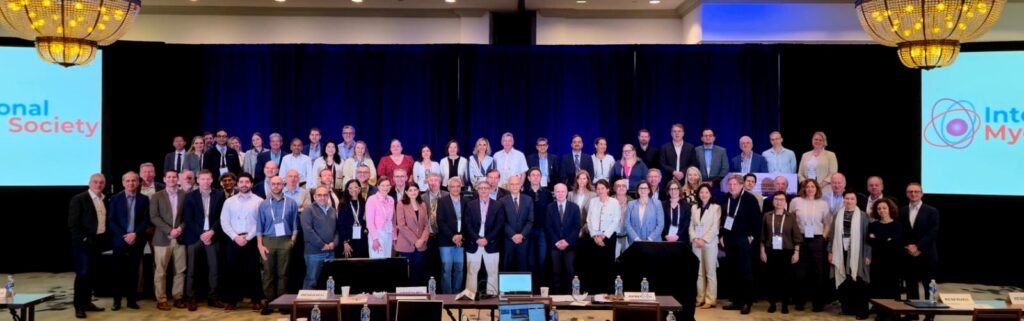
Last week, the International Myeloma Society (IMS) convened a historic meeting to answer a question our community has asked for decades: What does “cure” mean in multiple myeloma?
Over a day and a half, MMRF representatives and nearly 100 clinicians, researchers, industry partners, patient advocates, and patients came together in person, with more than 1,000 participating virtually. Together, we reviewed data spanning more than 30 years—the advent of Total Therapy pioneered at the University of Arkansas in the 1990s through today’s most advanced immunotherapies—to understand what depth and duration of response may truly predict long-term remission and cure.
Based on this meeting, the new proposed definition of a cure for multiple myeloma is:
Patients who are MRD-negative (meaning there are no myeloma cells detected among 1,000,000 plasma cells) and have been off all anti-myeloma therapy for five years may be considered cured.
This marks a profound shift for myeloma research and care.
Cure—Without Compromise
To create a proposed definition, attendees discussed three essential criteria for a cure:
- Effective therapy of finite duration
- No evidence of disease
- No relapse after stopping therapy
For years, continuous therapy has been the standard paradigm, with many patients on treatment indefinitely. But a cure means something fundamentally different and more patient-centered: no detectable disease and no need for ongoing treatment.
Importantly, this proposed definition applies to all patients: newly diagnosed or heavily pretreated, standard-risk or high-risk. Cure, we all agreed, should mean the same thing for every myeloma patient.
One critical caveat: Attendees agreed that cure cannot come at the expense of irreversible side effects or second cancers. Patients should expect not only freedom from myeloma, but to have a normal life expectancy and quality of life.
Defining cure is a watershed moment. Yet today, very few patients meet this five-year, treatment-free benchmark. That reality underscores how much work remains.
Powerful Patient Stories
The most inspiring moments at the meeting came from two extraordinary patients.
One underwent an allogeneic transplant more than 30 years ago and remains disease-free today. The other participated in the CARTITUDE-1 trial of the CAR T-cell therapy Carvykti® and has been off treatment for over seven years with no evidence of disease.
Their experiences and those of other long-term survivors remind us that cure is no longer theoretical—it is possible.
Meeting attendees also heard from leaders in lymphoma, testicular cancer, and lung cancer, where “cure” is already part of the standard vocabulary. Their frameworks helped inform the discussion of what this means for myeloma patients and for the design of clinical trials aiming to test cures.
The Roadmap to Cure
The MMRF is committed to leading the next chapter of this work. Our Foundation’s key priorities include:
- Identifying which current and emerging therapies have curative potential
- Understanding which patients are most likely to be cured with specific treatments
- Matching the right patient to the right potentially curative therapy
- Developing new options for patients who are unlikely to be cured with today’s treatments
- Ensuring curative strategies do not create unacceptable long-term risks
- Studying patients who live treatment-free with low-level disease (such as those reverting to an MGUS-like state)
- Advancing blood-based MRD testing to reduce reliance on bone marrow biopsies
Earlier this year, the MMRF launched the first study in our Translational Research Umbrella (TRU) program, enrolling 150 patients receiving BCMA-targeted CAR T-cell or bispecific antibody therapies as part of standard care. By deeply analyzing tumor biology, immune response, and the microbiome, we aim to understand who benefits most—including who may be cured—and why.
Importantly, gleaning insights into why some people can be considered cured will inform faster, better-designed clinical trials of potential curative treatments. Through our Horizon Clinical Trials Program, we will soon launch additional studies specifically designed with curative intent, building on insights from TRU.
A Historic Moment
For more than 25 years, the MMRF’s mission has been to accelerate a cure for every patient. For much of that time, “cure” felt aspirational. Our focus was ensuring patients lived longer, with new therapies always on the horizon, while we worked to better understand the biology of the disease.
Today, we stand at a turning point. Cure is no longer just a hope. It is an achievable goal.
But achieving it for every patient will require urgency, collaboration, and relentless focus. The MMRF will continue to lead and partner across the community until cure is not the exception, but the expectation—and until we can close our doors because our work is done.
What Myeloma Patients Need to Know Now: Answers to Frequently Ask Questions About the Definition of a Cure for Myeloma
Below, the MMRF team answers several questions we’re hearing from myeloma patients about this proposed definition.
1. How does this proposed definition become official? What happens now?
The International Myeloma Society (IMS) is a society that brings myeloma professionals, industry, researchers, and clinicians together to improve care and promote research. IMS convened this summit to establish a working consensus on a definition of cure in myeloma.
Now that IMS has settled on an official definition, it will help guide research moving forward, particularly when it comes to measuring who has an exceptional response to treatment and why. The field will also move toward standardized MRD testing.
It’s important to note that this definition—based on how other cancers define cure—may evolve over time as we learn more about the disease.
2. I was told multiple myeloma couldn’t be cured. What changed?
Two main factors influenced this definition:
- The field now has long-term data showing that a small set of myeloma patients are living for five or more years off all treatment. This conforms to the definition of cure in other cancers.
- The number of patients who meet this definition is small and they have been treated with various regimens over the years. But with the increasing use of CAR T-cell therapy in myeloma, researchers and clinicians are now seeing more patients who fit this definition and have received the same therapy.
3. How many myeloma patients might meet this definition of cure today?
Very few myeloma patients meet this definition of a cure today. But because of current and future transformative therapies, we expect that number to increase significantly in the coming years.
4. Does this proposed definition change myeloma care today?
It does not change myeloma care today, but it will likely change care in the coming years.
While the field has defined a cure for myeloma for the first time, the fact remains that unfortunately, we do not yet know how to cure every patient, and this definition only applies to a small number of people.
This definition reinforces the urgency of the MMRF’s mission and the need for more research to understand myeloma, uncover differences between myeloma patients and how they respond to treatments, and personalize care. The MMRF’s groundbreaking clinical trials and data initiatives will push the field forward toward a future where every patient is matched to a curative treatment.
If you think you meet this new definition of a cure or have other questions about your individual situation, talk to your myeloma specialist.
5. What happens if a patient meets the definition of cure and then relapses?
When a cured myeloma patient relapses, they will need treatment. This is an unfortunate reality in even the most curable cancers, such as early-stage breast cancers, thyroid and prostate cancers, and melanoma. This is called recurrence. Ongoing research is uncovering why this happens and what can be done to reduce recurrence.
This is why continued research into myeloma is so important. By better understanding the biology of myeloma and how it behaves in different patients, we can optimally treat each patient based on their individual characteristics and recurrence risk.
Further, with more data and research, this initial definition of a cure may evolve over time.
6. How does having a definition of cure change myeloma research? Could this reduce myeloma research funding or slow down drug development?
This is an exciting development for myeloma research. Having a universal definition of cure for the disease will allow researchers to test whether treatments like CAR T-cell therapy are actually curative and generate more data to help us understand who they are curative for and why.
Myeloma research and the MMRF’s research focus has never been more critical. Even if a small number of patients can currently be considered cured, we cannot predict who will be cured or what treatment will lead to cure, especially since those patients have received a variety of regimens.
Patients need more options. The myeloma research community and the MMRF will continue its urgent work to expand treatment options, better understand the disease, and identify curative therapies for every patient.
7. Does this definition apply to smoldering multiple myeloma?
Yes. This definition applies to every patient including those with smoldering multiple myeloma, those who are newly diagnosed, those who have relapse/refractory myeloma, and more.
In 2003, Jonathan Gluck went to see his doctor about lingering pain in his hip—pain that, over the course of a year, had grown so severe he was having trouble picking up his newborn daughter. His doctor ordered an MRI.
Jonathan was floored when he learned he had a cancerous lesion on his hip. At just 38 years old, he was diagnosed with multiple myeloma. One doctor told Jonathan he might have as little as 18 months to live.
As he was processing his new reality, lining up his care team, and making a treatment plan, Jonathan’s hematologist said something that has stuck with him ever since.
“He said to me, ‘You’re probably feeling very unlucky, but in a way you’re actually lucky. We’re on the verge of some big breakthroughs for this cancer,’” Jonathan remembered. “I thought he was just trying to give me an ounce of hope. But he turned out to be right. Each new treatment that’s come along—and the fact that I’ve responded well to many of them—has made me believe that.”
Over the two-plus decades since Jonathan was first diagnosed, these advances have kept him one step ahead of the disease. In 2023, Jonathan underwent successful CAR T-cell therapy and has been in remission since.
Despite multiple relapses and grueling rounds of treatment, Jonathan has been able to see both of his kids grow up, be there for his wife, go on bucket list fly-fishing trips, and keep doing work that he loves. More recently, he published an acclaimed memoir, An Exercise in Uncertainty, about his experience with myeloma.
Jonathan sees a direct line between the MMRF’s work and the scientific progress that has allowed him to live a full life with myeloma.
“The MMRF has led more than 100 clinical trials over the years, and they’re at the forefront of new research,” he said. “That’s tremendously important to me.”
Jonathan has also relied on the MMRF as a trusted source of information and guidance. In fact, he first learned about CAR T-cell therapy on an MMRF webinar, right as he was coming out of his last remission and getting sicker. Soon after, he and his doctor started talking about CAR T as an option.
“Everything I got from the MMRF was relevant, helpful, intelligently presented,” Jonathan said. “You can trust it. It’s authoritative.”
Though Jonathan has lived with myeloma for more than 20 years, he still has to navigate never-ending uncertainty and fear of another relapse, likening living with the disease to sleeping next to a hibernating bear.
“You might feel safe for a certain period of time while the bear is asleep, but you also know the bear’s going to wake up,” he said. “And when he does, he’s going to be hungry. That’s the feeling I’ve had for many years.”
Finding meaning, purpose, and community has been a salve. Over the years, his family has fundraised for the MMRF and attended the Foundation’s walks. He is also donating a portion of the proceeds from An Exercise in Uncertainty to the MMRF.
“Their work provides hope that there’s always something new around the corner,” he said. “I owe a lot of why I’m here to the MMRF.”
In 2026, charitable giving will undergo one of its most significant overhauls in years. Several new tax laws have now gone into effect that stand to impact nearly all donors—from those who send $10 checks to those who make multi-million-dollar gifts.
At every level, the Multiple Myeloma Research Foundation’s generous donors help us accelerate cures for each and every patient. Their support drives groundbreaking clinical trials and data initiatives, fuels investments in the most promising early-stage companies, and empowers patients and their loved ones with trusted resources and support.
To help our donors understand these changes, the MMRF breaks down the most important things donors need to know in 2026 and beyond.
Note: This article is for educational purposes only. Always consult a tax professional about your individual tax situation and giving strategy.
1. A new charitable write-off for people who take the standard deduction
Today, nearly 90 percent of taxpayers (and estimated 144 million people) opt to take the standard deduction instead of itemizing. Since 2022, this has meant that their charitable gifts have no impact on their income at tax time.
But starting this year, taxpayers who opt for the standard deduction can take advantage of a new charitable tax deduction of up to $1,000 for single filers and up to $2,000 for joint filers.
This new deduction only applies to cash gifts made directly to qualified 501(c)(3) organizations like the MMRF. Eligible contributions include those made online and by credit card or check. Non-cash gifts (such as donated stocks, securities, or goods) do not qualify, and donations made through donor-advised funds are not eligible.
Be sure to save your MMRF donation receipt for any gifts you make in 2026 so you can properly claim this deduction at tax time next year.
2. Itemizers have to clear a new AGI “floor”
Donors who itemize face a few important limits and rules this year.
Most notably, itemizers now face a new “floor” for deducting charitable gifts. Starting this year, only gifts that exceed .5 percent of a filer’s adjusted gross income (AGI) are deductible. For example, if your AGI is $400,000, only gifts you make above a total of $2,000 can be deducted. In other words, if you donated $20,000 to qualified nonprofits over the course of the year or in one lump sum, you can deduct $18,000 of that amount.
This change may influence how donors approach their giving. Some might opt to make a larger donation every few years to clear this floor. Donors who are at or over the age of 70.5 might instead explore qualified charitable distributions (QCDs) from retirement accounts, since QCDs are not subject to this rule.
3. Higher deduction limits remain for larger gifts
The new tax law made permanent a rule allowing donors to deduct cash donations up to 60 percent of their AGI. Certain non-cash donations are capped at 50 percent of AGI, and donations of appreciated stock are capped at 30 percent.
If you make both types of donations in one year, you must deduct cash gifts first. This may limit how much of your non-cash contributions you can deduct.
4. A lower deduction cap for top earners
In 2026, taxpayers in the highest tax bracket will have all their itemized deductions capped at 35 percent rather than 37 percent. In other words, high-income itemizers will experience fewer tax savings from donating to nonprofits.
If you have any questions about donating to the MMRF this year, we’re here to help. Email us at [email protected].
The Multiple Myeloma Research Foundation® (MMRF®) has just launched its agile, next-generation Translational Research Umbrella (TRU) program to answer some of the most pressing questions facing multiple myeloma patients now. Its first substudy will focus on important unknowns about two of myeloma’s most innovative immune therapies: CAR T-cell therapy and bispecific antibody treatments (bispecifics).
TRU builds on the CoMMpassSM Study and Immune Atlas, two landmark MMRF data-generation initiatives that changed our understanding of multiple myeloma. Leveraging cutting-edge technology and partnerships with top medical centers, TRU enables us to rapidly gather data about how patients respond to treatments in the real world.
CAR T and bispecifics have been transformative for multiple myeloma patients. But patients still relapse after receiving them and some don’t respond at all; some patients experience certain side effects and others don’t. The first substudy, TRU-1, aims to answer questions that others aren’t incentivized to explore: Who benefits from these treatments? Who doesn’t? And why?
“TRU’s ultimate goal is to move the most promising options to earlier lines of care, inform new therapies, and optimize treatment for all patients,” said the MMRF’s Chief Scientific Officer George Mulligan, PhD. “In the future, this will help us predict which patients will have remarkable benefit from these therapies and who may not, or who perhaps may need to have one more drug added to get the best possible results.”
TRU-1, which is currently enrolling 150 patients, aims to not only gather detailed samples and data about how and why patients respond to these treatments, but to create a team of doctors and scientists who will analyze the results. Uniquely, this study will look at patients’ immune microenvironments and microbiomes along with the myeloma cells and link those findings to each patient’s clinical response to treatment.
A collaborative network of 15 major medical centers across the country will enroll patients and collect samples in collaboration with the MMRF. These centers will participate in the analysis of study data, and the MMRF will also share the entire dataset with interested researchers across the globe. By working across institutions, the MMRF and its partners can enroll more patients and collect more samples and data than any one center could on its own.
“The MMRF has been an important collaborative force in multiple myeloma since its founding, and TRU is yet another example of how we’re generating important data and pushing boundaries,” MMRF President and CEO Michael Andreini said. “Most importantly, as multiple myeloma’s leading research foundation, we’ve designed TRU to answer the most pressing questions for patients. We look forward to sharing insights from TRU-1 to inform how myeloma patients are treated with immune therapies in the future.”
By Stephanie Oestreich, PhD, MPA, Managing Director of the MIF
Every January, healthcare leaders converge on San Francisco for the annual JP Morgan Healthcare Conference and other related events known as “JPM Week.” As Managing Director of the Multiple Myeloma Research Foundation’s venture philanthropy arm, the Myeloma Investment Fund (MIF), JPM Week and other conferences are important opportunities to keep with the latest trends and meet with potential and existing partners on behalf of the MIF and MMRF.
This year’s conference revealed an industry hitting its stride after an unpredictable 2025. Renewed investment momentum, groundbreaking science, more strategic use of AI, and innovative global collaborations are helping create unprecedented opportunities to improve outcomes for multiple myeloma patients and others.
Here are my top four takeaways from JPM Week 2026 and what they mean for the future of multiple myeloma research and treatment.
1. Biotech investment is regaining its momentum.
After a rocky start to 2025, venture investing bounced back in the second half of the year, driven in large part by more favorable macroeconomic factors, recent drug approvals for large indications, and the increasing use of technology like artificial intelligence (AI) in drug development.
Two companies in the MIF portfolio, Abcuro and Stylus, had some of the field’s strongest venture capital funding rounds in 2025—an acknowledgement of the caliber of the companies the MIF invests in. These investments also give Abcuro and Stylus the resources they need to advance their myeloma treatments through clinical trials and get them to patients sooner.
2. AI is speeding up drug development. But expertise matters.
I met with several companies leveraging AI-based technologies and novel drug discovery approaches specifically for multiple myeloma, and I had the opportunity to moderate a panel on AI’s role in life sciences today. For a highly complex disease like multiple myeloma, AI will be particularly valuable for gleaning insights into the biological drivers of the disease and for developing more precise, effective therapies.
But JPM Week made one thing clear: AI is only as good as the quality of the data that a model is trained on and the team that wields it. The companies poised to succeed are those that deeply understand drug development, have sound business models, and use AI to accelerate—not replace—their existing expertise.
The MIF will continue prioritizing partnerships with teams that combine scientific rigor, clinical development experience, and smart use of technology to maximize impact for myeloma patients.
3. China’s biotech rise offers lessons for American innovation.
China’s biotech innovation was a recurring theme at JPM Week this week. Nearly half of all pharmaceutical deals in 2025 were with Chinese companies.
Rather than viewing their Chinese counterparts solely as competition, forward-thinking U.S. companies are licensing promising Chinese assets, using efficient Chinese contract research organizations, and running clinical trials in the country. The lesson for American biotech isn’t to retreat, but to learn: China’s success stems from robust early-stage science funding and streamlined regulatory processes.
4. Exciting scientific developments are coming down the pike.
Beyond the headlines about AI, China, and investors’ cautious optimism, JPM Week showcased genuinely great science. Companies are tackling previously “undruggable” targets, developing novel manufacturing technologies, advancing next-generation in-vivo CAR-T therapies that could eliminate the need for cell collection and manufacturing delays, and so much more.
This wave of innovation means that there are more opportunities for the MIF and MMRF to invest in companies pursuing promising novel treatments for myeloma and ways to overcome resistance that may help improve patient outcomes.
Looking ahead on the MIF’s strategic priorities for 2026
In the coming year, the MIF will prioritize three core areas for investment: novel CAR-T design and delivery technologies, therapies that enhance the patient’s immune system, and therapies for targets that have been undruggable so far. These focus areas reflect both the cutting-edge science showcased at JPM Week and the areas where we believe the MIF and MMRF can have the greatest impact for myeloma patients.
Having already made our first investment for the new year, we’re entering 2026 energized by the innovation and momentum we witnessed at JPM Week and in the broader industry. Above all, we remain committed to accelerating cures for multiple myeloma patients by backing the most promising companies in the field.