
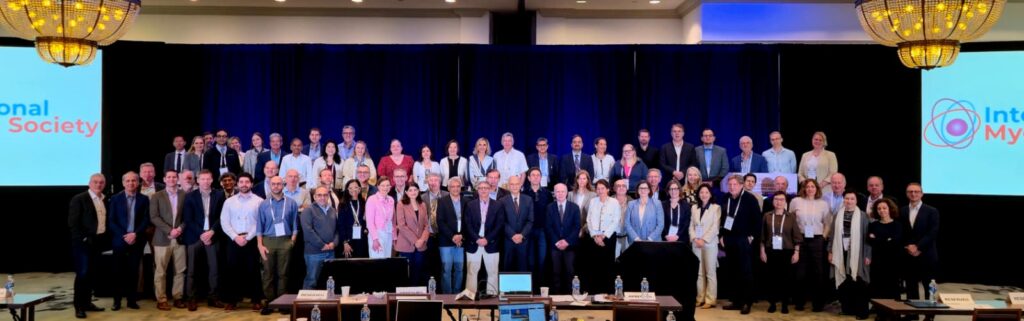
Last week, the International Myeloma Society (IMS) convened a historic meeting to answer a question our community has asked for decades: What does “cure” mean in multiple myeloma?
Over a day and a half, MMRF representatives and nearly 100 clinicians, researchers, industry partners, patient advocates, and patients came together in person, with more than 1,000 participating virtually. Together, we reviewed data spanning more than 30 years—the advent of Total Therapy pioneered at the University of Arkansas in the 1990s through today’s most advanced immunotherapies—to understand what depth and duration of response may truly predict long-term remission and cure.
Based on this meeting, the new proposed definition of a cure for multiple myeloma is:
Patients who are MRD-negative (meaning there are no myeloma cells detected among 1,000,000 plasma cells) and have been off all anti-myeloma therapy for five years may be considered cured.
This marks a profound shift for myeloma research and care.
Cure—Without Compromise
To create a proposed definition, attendees discussed three essential criteria for a cure:
- Effective therapy of finite duration
- No evidence of disease
- No relapse after stopping therapy
For years, continuous therapy has been the standard paradigm, with many patients on treatment indefinitely. But a cure means something fundamentally different and more patient-centered: no detectable disease and no need for ongoing treatment.
Importantly, this proposed definition applies to all patients: newly diagnosed or heavily pretreated, standard-risk or high-risk. Cure, we all agreed, should mean the same thing for every myeloma patient.
One critical caveat: Attendees agreed that cure cannot come at the expense of irreversible side effects or second cancers. Patients should expect not only freedom from myeloma, but to have a normal life expectancy and quality of life.
Defining cure is a watershed moment. Yet today, very few patients meet this five-year, treatment-free benchmark. That reality underscores how much work remains.
Powerful Patient Stories
The most inspiring moments at the meeting came from two extraordinary patients.
One underwent an allogeneic transplant more than 30 years ago and remains disease-free today. The other participated in the CARTITUDE-1 trial of the CAR T-cell therapy Carvykti® and has been off treatment for over seven years with no evidence of disease.
Their experiences and those of other long-term survivors remind us that cure is no longer theoretical—it is possible.
Meeting attendees also heard from leaders in lymphoma, testicular cancer, and lung cancer, where “cure” is already part of the standard vocabulary. Their frameworks helped inform the discussion of what this means for myeloma patients and for the design of clinical trials aiming to test cures.
The Roadmap to Cure
The MMRF is committed to leading the next chapter of this work. Our Foundation’s key priorities include:
- Identifying which current and emerging therapies have curative potential
- Understanding which patients are most likely to be cured with specific treatments
- Matching the right patient to the right potentially curative therapy
- Developing new options for patients who are unlikely to be cured with today’s treatments
- Ensuring curative strategies do not create unacceptable long-term risks
- Studying patients who live treatment-free with low-level disease (such as those reverting to an MGUS-like state)
- Advancing blood-based MRD testing to reduce reliance on bone marrow biopsies
Earlier this year, the MMRF launched the first study in our Translational Research Umbrella (TRU) program, enrolling 150 patients receiving BCMA-targeted CAR T-cell or bispecific antibody therapies as part of standard care. By deeply analyzing tumor biology, immune response, and the microbiome, we aim to understand who benefits most—including who may be cured—and why.
Importantly, gleaning insights into why some people can be considered cured will inform faster, better-designed clinical trials of potential curative treatments. Through our Horizon Clinical Trials Program, we will soon launch additional studies specifically designed with curative intent, building on insights from TRU.
A Historic Moment
For more than 25 years, the MMRF’s mission has been to accelerate a cure for every patient. For much of that time, “cure” felt aspirational. Our focus was ensuring patients lived longer, with new therapies always on the horizon, while we worked to better understand the biology of the disease.
Today, we stand at a turning point. Cure is no longer just a hope. It is an achievable goal.
But achieving it for every patient will require urgency, collaboration, and relentless focus. The MMRF will continue to lead and partner across the community until cure is not the exception, but the expectation—and until we can close our doors because our work is done.
In 2003, Jonathan Gluck went to see his doctor about lingering pain in his hip—pain that, over the course of a year, had grown so severe he was having trouble picking up his newborn daughter. His doctor ordered an MRI.
Jonathan was floored when he learned he had a cancerous lesion on his hip. At just 38 years old, he was diagnosed with multiple myeloma. One doctor told Jonathan he might have as little as 18 months to live.
As he was processing his new reality, lining up his care team, and making a treatment plan, Jonathan’s hematologist said something that has stuck with him ever since.
“He said to me, ‘You’re probably feeling very unlucky, but in a way you’re actually lucky. We’re on the verge of some big breakthroughs for this cancer,’” Jonathan remembered. “I thought he was just trying to give me an ounce of hope. But he turned out to be right. Each new treatment that’s come along—and the fact that I’ve responded well to many of them—has made me believe that.”
Over the two-plus decades since Jonathan was first diagnosed, these advances have kept him one step ahead of the disease. In 2023, Jonathan underwent successful CAR T-cell therapy and has been in remission since.
Despite multiple relapses and grueling rounds of treatment, Jonathan has been able to see both of his kids grow up, be there for his wife, go on bucket list fly-fishing trips, and keep doing work that he loves. More recently, he published an acclaimed memoir, An Exercise in Uncertainty, about his experience with myeloma.
Jonathan sees a direct line between the MMRF’s work and the scientific progress that has allowed him to live a full life with myeloma.
“The MMRF has led more than 100 clinical trials over the years, and they’re at the forefront of new research,” he said. “That’s tremendously important to me.”
Jonathan has also relied on the MMRF as a trusted source of information and guidance. In fact, he first learned about CAR T-cell therapy on an MMRF webinar, right as he was coming out of his last remission and getting sicker. Soon after, he and his doctor started talking about CAR T as an option.
“Everything I got from the MMRF was relevant, helpful, intelligently presented,” Jonathan said. “You can trust it. It’s authoritative.”
Though Jonathan has lived with myeloma for more than 20 years, he still has to navigate never-ending uncertainty and fear of another relapse, likening living with the disease to sleeping next to a hibernating bear.
“You might feel safe for a certain period of time while the bear is asleep, but you also know the bear’s going to wake up,” he said. “And when he does, he’s going to be hungry. That’s the feeling I’ve had for many years.”
Finding meaning, purpose, and community has been a salve. Over the years, his family has fundraised for the MMRF and attended the Foundation’s walks. He is also donating a portion of the proceeds from An Exercise in Uncertainty to the MMRF.
“Their work provides hope that there’s always something new around the corner,” he said. “I owe a lot of why I’m here to the MMRF.”
In 2026, charitable giving will undergo one of its most significant overhauls in years. Several new tax laws have now gone into effect that stand to impact nearly all donors—from those who send $10 checks to those who make multi-million-dollar gifts.
At every level, the Multiple Myeloma Research Foundation’s generous donors help us accelerate cures for each and every patient. Their support drives groundbreaking clinical trials and data initiatives, fuels investments in the most promising early-stage companies, and empowers patients and their loved ones with trusted resources and support.
To help our donors understand these changes, the MMRF breaks down the most important things donors need to know in 2026 and beyond.
Note: This article is for educational purposes only. Always consult a tax professional about your individual tax situation and giving strategy.
1. A new charitable write-off for people who take the standard deduction
Today, nearly 90 percent of taxpayers (and estimated 144 million people) opt to take the standard deduction instead of itemizing. Since 2022, this has meant that their charitable gifts have no impact on their income at tax time.
But starting this year, taxpayers who opt for the standard deduction can take advantage of a new charitable tax deduction of up to $1,000 for single filers and up to $2,000 for joint filers.
This new deduction only applies to cash gifts made directly to qualified 501(c)(3) organizations like the MMRF. Eligible contributions include those made online and by credit card or check. Non-cash gifts (such as donated stocks, securities, or goods) do not qualify, and donations made through donor-advised funds are not eligible.
Be sure to save your MMRF donation receipt for any gifts you make in 2026 so you can properly claim this deduction at tax time next year.
2. Itemizers have to clear a new AGI “floor”
Donors who itemize face a few important limits and rules this year.
Most notably, itemizers now face a new “floor” for deducting charitable gifts. Starting this year, only gifts that exceed .5 percent of a filer’s adjusted gross income (AGI) are deductible. For example, if your AGI is $400,000, only gifts you make above a total of $2,000 can be deducted. In other words, if you donated $20,000 to qualified nonprofits over the course of the year or in one lump sum, you can deduct $18,000 of that amount.
This change may influence how donors approach their giving. Some might opt to make a larger donation every few years to clear this floor. Donors who are at or over the age of 70.5 might instead explore qualified charitable distributions (QCDs) from retirement accounts, since QCDs are not subject to this rule.
3. Higher deduction limits remain for larger gifts
The new tax law made permanent a rule allowing donors to deduct cash donations up to 60 percent of their AGI. Certain non-cash donations are capped at 50 percent of AGI, and donations of appreciated stock are capped at 30 percent.
If you make both types of donations in one year, you must deduct cash gifts first. This may limit how much of your non-cash contributions you can deduct.
4. A lower deduction cap for top earners
In 2026, taxpayers in the highest tax bracket will have all their itemized deductions capped at 35 percent rather than 37 percent. In other words, high-income itemizers will experience fewer tax savings from donating to nonprofits.
If you have any questions about donating to the MMRF this year, we’re here to help. Email us at [email protected].
The Multiple Myeloma Research Foundation® (MMRF®) has just launched its agile, next-generation Translational Research Umbrella (TRU) program to answer some of the most pressing questions facing multiple myeloma patients now. Its first substudy will focus on important unknowns about two of myeloma’s most innovative immune therapies: CAR T-cell therapy and bispecific antibody treatments (bispecifics).
TRU builds on the CoMMpassSM Study and Immune Atlas, two landmark MMRF data-generation initiatives that changed our understanding of multiple myeloma. Leveraging cutting-edge technology and partnerships with top medical centers, TRU enables us to rapidly gather data about how patients respond to treatments in the real world.
CAR T and bispecifics have been transformative for multiple myeloma patients. But patients still relapse after receiving them and some don’t respond at all; some patients experience certain side effects and others don’t. The first substudy, TRU-1, aims to answer questions that others aren’t incentivized to explore: Who benefits from these treatments? Who doesn’t? And why?
“TRU’s ultimate goal is to move the most promising options to earlier lines of care, inform new therapies, and optimize treatment for all patients,” said the MMRF’s Chief Scientific Officer George Mulligan, PhD. “In the future, this will help us predict which patients will have remarkable benefit from these therapies and who may not, or who perhaps may need to have one more drug added to get the best possible results.”
TRU-1, which is currently enrolling 150 patients, aims to not only gather detailed samples and data about how and why patients respond to these treatments, but to create a team of doctors and scientists who will analyze the results. Uniquely, this study will look at patients’ immune microenvironments and microbiomes along with the myeloma cells and link those findings to each patient’s clinical response to treatment.
A collaborative network of 15 major medical centers across the country will enroll patients and collect samples in collaboration with the MMRF. These centers will participate in the analysis of study data, and the MMRF will also share the entire dataset with interested researchers across the globe. By working across institutions, the MMRF and its partners can enroll more patients and collect more samples and data than any one center could on its own.
“The MMRF has been an important collaborative force in multiple myeloma since its founding, and TRU is yet another example of how we’re generating important data and pushing boundaries,” MMRF President and CEO Michael Andreini said. “Most importantly, as multiple myeloma’s leading research foundation, we’ve designed TRU to answer the most pressing questions for patients. We look forward to sharing insights from TRU-1 to inform how myeloma patients are treated with immune therapies in the future.”
By Stephanie Oestreich, PhD, MPA, Managing Director of the MIF
Every January, healthcare leaders converge on San Francisco for the annual JP Morgan Healthcare Conference and other related events known as “JPM Week.” As Managing Director of the Multiple Myeloma Research Foundation’s venture philanthropy arm, the Myeloma Investment Fund (MIF), JPM Week and other conferences are important opportunities to keep with the latest trends and meet with potential and existing partners on behalf of the MIF and MMRF.
This year’s conference revealed an industry hitting its stride after an unpredictable 2025. Renewed investment momentum, groundbreaking science, more strategic use of AI, and innovative global collaborations are helping create unprecedented opportunities to improve outcomes for multiple myeloma patients and others.
Here are my top four takeaways from JPM Week 2026 and what they mean for the future of multiple myeloma research and treatment.
1. Biotech investment is regaining its momentum.
After a rocky start to 2025, venture investing bounced back in the second half of the year, driven in large part by more favorable macroeconomic factors, recent drug approvals for large indications, and the increasing use of technology like artificial intelligence (AI) in drug development.
Two companies in the MIF portfolio, Abcuro and Stylus, had some of the field’s strongest venture capital funding rounds in 2025—an acknowledgement of the caliber of the companies the MIF invests in. These investments also give Abcuro and Stylus the resources they need to advance their myeloma treatments through clinical trials and get them to patients sooner.
2. AI is speeding up drug development. But expertise matters.
I met with several companies leveraging AI-based technologies and novel drug discovery approaches specifically for multiple myeloma, and I had the opportunity to moderate a panel on AI’s role in life sciences today. For a highly complex disease like multiple myeloma, AI will be particularly valuable for gleaning insights into the biological drivers of the disease and for developing more precise, effective therapies.
But JPM Week made one thing clear: AI is only as good as the quality of the data that a model is trained on and the team that wields it. The companies poised to succeed are those that deeply understand drug development, have sound business models, and use AI to accelerate—not replace—their existing expertise.
The MIF will continue prioritizing partnerships with teams that combine scientific rigor, clinical development experience, and smart use of technology to maximize impact for myeloma patients.
3. China’s biotech rise offers lessons for American innovation.
China’s biotech innovation was a recurring theme at JPM Week this week. Nearly half of all pharmaceutical deals in 2025 were with Chinese companies.
Rather than viewing their Chinese counterparts solely as competition, forward-thinking U.S. companies are licensing promising Chinese assets, using efficient Chinese contract research organizations, and running clinical trials in the country. The lesson for American biotech isn’t to retreat, but to learn: China’s success stems from robust early-stage science funding and streamlined regulatory processes.
4. Exciting scientific developments are coming down the pike.
Beyond the headlines about AI, China, and investors’ cautious optimism, JPM Week showcased genuinely great science. Companies are tackling previously “undruggable” targets, developing novel manufacturing technologies, advancing next-generation in-vivo CAR-T therapies that could eliminate the need for cell collection and manufacturing delays, and so much more.
This wave of innovation means that there are more opportunities for the MIF and MMRF to invest in companies pursuing promising novel treatments for myeloma and ways to overcome resistance that may help improve patient outcomes.
Looking ahead on the MIF’s strategic priorities for 2026
In the coming year, the MIF will prioritize three core areas for investment: novel CAR-T design and delivery technologies, therapies that enhance the patient’s immune system, and therapies for targets that have been undruggable so far. These focus areas reflect both the cutting-edge science showcased at JPM Week and the areas where we believe the MIF and MMRF can have the greatest impact for myeloma patients.
Having already made our first investment for the new year, we’re entering 2026 energized by the innovation and momentum we witnessed at JPM Week and in the broader industry. Above all, we remain committed to accelerating cures for multiple myeloma patients by backing the most promising companies in the field.
Scientists have long studied myeloma cells’ genetic features to better understand how the disease behaves in patients. But much less is known about the role the immune system plays. Now, new research from the Multiple Myeloma Research Foundation (MMRF) and its partners offers groundbreaking insights on this complex and important relationship—work that is a major advancement in our understanding of the disease and patient outcomes.
This research—a paper published today in Nature Cancer and another published last month in Blood Cancer Discovery—is the result of a years-long collaborative project called the Immune Atlas. The MMRF launched this initiative in 2019 with five leading academic medical centers: Emory University, Beth Israel Deaconess, Washington University School of Medicine in St. Louis, Icahn School of Medicine at Mount Sinai, and the Mayo Clinic.
Crucially, these two publications demonstrate the unique role that the MMRF plays in driving collaborative science. These reports also represent the first of many forthcoming insights as investigators continue to analyze this invaluable dataset.
Here, the MMRF highlights the major findings, how the MMRF’s forethought drove these discoveries, and what’s to come.
Highlights from Nature Cancer
Investigators involved in today’s Nature Cancer paper created an unprecedented map of the environment around myeloma cells by using sophisticated single-cell sequencing technology to analyze millions of individual immune cells.
To better understand how the immune system behaves in myeloma, the team studied bone marrow samples from 337 newly diagnosed patients who enrolled in the MMRF’s CoMMpass Study. Researchers carefully measured the types and amounts of different immune cells and compared these patterns across patients. Then they linked this information to how each person’s disease progressed and their survival after treatment. This allowed them to see which immune system features related to faster or slower disease progression.
“This is the most robust characterization of the immune system in newly diagnosed multiple myeloma patients and a major advancement in our understanding of the disease,” said the MMRF’s Chief Scientific Officer George Mulligan, PhD.
Importantly, this study showed that immune information can be combined with what we already know about the genetics of myeloma tumor cells to better define the biology of aggressive cases. For example, in patients whose disease progressed quickly despite low-risk tumor genetics (or slowly despite high-risk genetics) immune differences may help explain this unpredictable clinical outcome. These include loss or accumulation of certain T cells that led to an immunosuppressed state, and certain gene expression changes within immune cells.
While this work does not yet allow clinicians to make personalized treatment decisions, it demonstrates the potential value of immune information for future care. It also sets the stage for further research on immune function in myeloma patients treated with recently approved immune therapies. Further, this unique dataset from 337 patients will be shared on Virtual Lab, the MMRF’s data platform, enabling additional researchers across the globe to test new immune related ideas more quickly.
Highlights from Blood Cancer Discovery
The Blood Cancer Discovery paper, published on December 9, provides another example of the power of the MMRF’s large datasets. Using the Atlas’ immune and clinical data, investigators focused on the 102 patients who donated multiple bone marrow samples during their myeloma journey, including when they were first diagnosed, after they had responded to treatment, and after disease relapse (when the myeloma returned after a response).
By following these patients and collecting this unprecedented data, the team made several critical discoveries to describe specific immune system changes in these patients over time:
- Patients who had longer remissions after stem cell transplant had more B-cells (a type of immune cell) that were “naïve,” meaning that they hadn’t been exposed to myeloma cells before.
- When patients had high levels of inflammation, their immune system had a harder time forming a lasting “memory.”
- In about 40 percent of patients, myeloma cells activated the expression of genes encoding certain “cancer-testis antigens” not normally part of risk models.
Overall, this paper revealed that the immune system’s ability to recover after treatment strongly predicts how long patients will stay in remission. Measuring immune health after treatment may eventually help doctors identify patients who are at a high risk of relapse and then optimize their treatment. This study also opens the door for further research into targets for immunotherapy and other strategies to strengthen patients’ immune systems.
Expanding the Power of MMRF’s Data and Network
The MMRF Immune Atlas data that powered this research was born out of the MMRF’s seminal CoMMpass Study, the largest, most detailed myeloma dataset available today. This collection of patient data and clinical outcomes, tumor genomics, clinical samples, and Immune Atlas data is publicly available to the scientific community and continues to generate new insights. Immune Atlas data provides a foundation for additional immune-related research by this MMRF Atlas team and researchers worldwide. This dataset, by virtue of size, multi-center origin, and MMRF’s commitment to rapid data sharing, will facilitate a variety of new insights.
The MMRF’s broad network of partners made the Immune Atlas possible. By initiating, funding, and leading new concepts—and then actively collaborating with five leading medical centers to advance data generation and analysis—the MMRF and its partners created a shared immune resource that no institution could have developed alone.
“Since multiple myeloma is highly complex and varies from patient to patient, creating an atlas that reflects the heterogeneity of the disease required a large number of CoMMpass patients and investigators at five centers working together,” Mulligan said. “The MMRF is grateful to our institutional partners and the many patients who joined this research. These reports represent years of work and are the perfect example of the kind of highly collaborative, data-driven research that will propel the field’s next breakthroughs and, ultimately, improve outcomes for patients.”
Once again, the Multiple Myeloma Research Foundation’s programs and data are the catalysts for some of the most important updates at the 2025 American Society of Hematology (ASH) Annual Meeting. The MMRF will also bring together institutional and pharma partners for a day of pre-conference meetings to share learnings, review emerging data, and more.
Every December, more than 30,000 leading researchers, clinicians, and patient advocates gather at the ASH Annual Meeting to discuss the latest discoveries in multiple myeloma and other blood diseases.
“ASH is an important opportunity for the MMRF team to not only present original research and hear updates from the wider community, but to create opportunities for the kind of collaboration and knowledge-sharing that drives innovation and the next breakthroughs for patients,” said MMRF President and CEO Michael Andreini.
MMRF Data Continue to Power Insights Across the Field
To meaningfully advance patient care and outcomes, researchers need large sets of high-quality data like that from the MMRF’s seminal CoMMpass℠ Study and Immune Atlas project. CoMMpass- and Immune Atlas–enabled research will again take center stage at ASH, underpinning 28 oral and poster presentations from the MMRF and leading academic institutions and medical centers.
Launched over a decade ago, CoMMpass followed more than 1,100 patients for eight years, mapping genomic and clinical data to patient outcomes. Its open-access data have now been included in hundreds of published and presented studies, powering research on myeloma risk, immune profiling, mechanisms of resistance, and more.
Using highly sophisticated sequencing technology and samples from CoMMpass, the Immune Atlas project has now profiled 1.39 million bone marrow cells from newly diagnosed myeloma patients. This has generated groundbreaking insights into how the immune microenvironment shapes disease progression, treatment response, and relapse risk.
Of these abstracts, the MMRF team will present a poster featuring new research on the immune microenvironment. Using paired immune and tumor cell profiling from the MMRF Immune Atlas, this study integrates single-cell and bulk RNA sequencing data from CoMMpass participants to help decipher which myeloma patients might be most likely to respond to immune checkpoint inhibitors, a type of immunotherapy that has shown promise for multiple myeloma.
All of these presentations demonstrate the powerful ongoing impact of CoMMpass and Immune Atlas, which serve as foundational resources for myeloma.
“CoMMpass and the Immune Atlas offer an unparalleled genomic map of multiple myeloma and continue to accelerate myeloma research,” said the MMRF’s Chief Scientific Officer George Mulligan, PhD. “These programs underscore the work we’re leading to optimize treatments for myeloma patients.”
The MMRF team will present an additional poster that leverages data from its MyDRUG℠ platform trial. This analysis examines how daratumumab-based quadruplet therapy influences T-cell activation and signaling over time. Results from this work can be further studied to improve targeted and immune therapies for myeloma. This report also demonstrates how the MMRF integrates translational research within its clinical programs.
Fostering Collaboration for Future Breakthroughs
Beyond MMRF-backed presentations throughout the next four days, the Foundation also continues to be an important convener at global meetings like ASH. Yesterday, it brought pharma and institutional partners together for an enriching day of workshops, events and meetings.
Investigators and project managers from several key Multiple Myeloma Research Consortium® (MMRC®) sites throughout the U.S. came together to discuss progress on its many clinical and translational research initiatives, including the MMRC’s Horizon adaptive platform clinical trials initiative and Translational Research Umbrella study. Both play a significant role in advancing and improving the medical community’s understanding of multiple myeloma treatments.
Clinical investigators conducting the Horizon One clinical trial in patients with relapsed and refractory multiple myeloma discussed how they have exceeded enrollment goals, including enrolling a more representative patient population than any other multiple myeloma trial to date. The MMRC also shared that the Horizon Two trial—which is focused on advancing innovative treatments for patients with high-risk, newly diagnosed multiple myeloma—will soon launch. This is the 101st clinical trial conducted through the MMRC.
The MMRF also announced that two new clinical research sites have joined the MMRC: the University of Pennsylvania and the University of North Carolina at Chapel Hill. The addition of these locations expands the Foundation’s clinical research consortium network to 22 leading myeloma centers.
The MMRF also brought together researchers, clinicians and biopharma representatives for our annual “Immunity Workshop” to consider future clinical and translational studies harnessing the MMRF’s aforementioned Immune Atlas project, which has already helped shape the field’s understanding of the immune microenvironment in multiple myeloma.
And other MMRF partners will join several other Foundation-sponsored events during ASH. The 10 academic sites that collaborate on the high-risk, newly diagnosed Myeloma Accelerator Challenge Program will gather to share the most recent progress in a joint meeting of U.S.- and European Union–based clinical centers. Meanwhile the early- and mid-career scientists that the MMRF currently supports through its Scholars and Fellows program will share exciting progress on their ongoing projects.
By connecting the myeloma community and making our valuable data accessible to the research community, the MMRF is transforming insights into action and advancing its mission to accelerate a cure for every patient.
“At ASH, we’re reminded that progress in multiple myeloma doesn’t happen in isolation,” Mulligan said. “It’s the result of partnerships, a focus on new datasets, and broad data sharing—exactly the kind of collaboration that the MMRF alone is built to drive.”
Follow along on the MMRF blog and on social media for daily recaps from the ASH Annual Meeting 2025.